
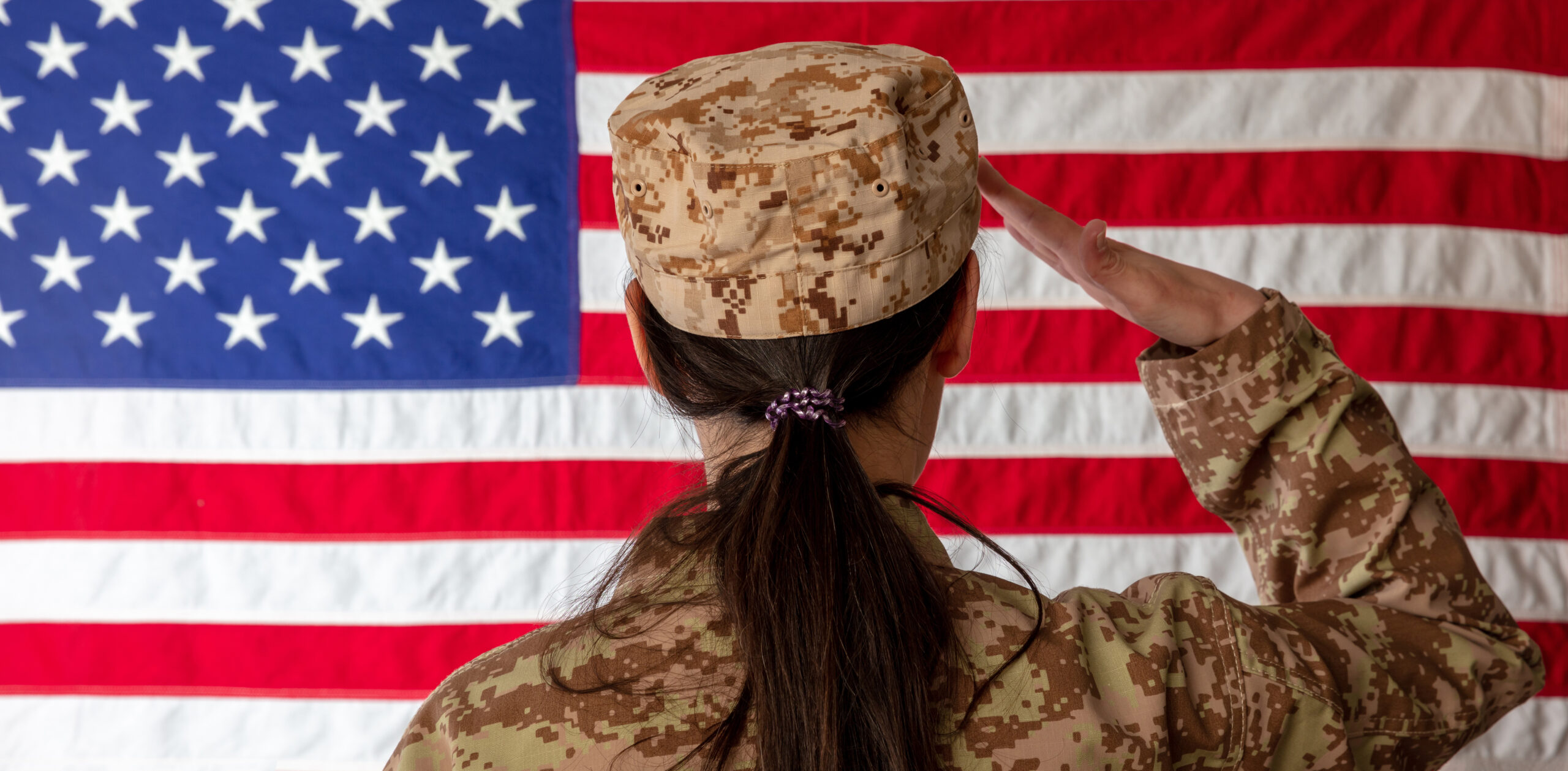
Women have been part of American military history since before the country officially had a standing army. In many cases, they served before military regulations fully recognized their contributions or allowed them to openly participate.
August offers an especially fitting opportunity to look at their history. Women’s Equality Day is observed on August 26, commemorating the certification of the 19th Amendment in 1920. The history of women in the military offers another lens on changing opportunities for women in American life.
Some military women trailblazers became known for being the first to hold a particular rank or position. Others served at a time when the military did not formally have a place for them at all. Together, their stories show how women’s roles in military service developed over more than two centuries.
Deborah Sampson: Serving During the American Revolution
During the Revolutionary War, women supported military operations in many capacities, but formal enlistment was another matter.
In 1782, Deborah Sampson enlisted in the Continental Army under the name Robert Shurtliff. Disguised as a man, the 21-year-old served with the 4th Massachusetts Regiment and participated in military operations before her identity was discovered.
Her story offers an early example of a woman determined to serve despite the restrictions of her time. It also reminds us that women were present within the military history of the nation from its earliest years, even when their participation did not fit established expectations.
Read her story: Masquerade: The Life and Times of Deborah Sampson, Continental Soldier by Alfred F. Young
Dr. Mary Edwards Walker: The Only Female Medal of Honor Recipient
Dr. Mary Edwards Walker entered the Civil War as a trained physician at a time when women physicians were themselves unusual. When she sought a commission as an Army surgeon, she was initially turned away because she was a woman. She volunteered instead and eventually served as a contract surgeon for the Union Army.
Walker treated wounded soldiers, crossed battle lines to provide medical care, and was captured and held as a prisoner of war. In 1865, she received the Medal of Honor. To this day, Mary Edwards Walker remains the only woman ever awarded the Medal of Honor. Her award was among those revoked following a government review in 1917 and was restored in 1977.
Her career challenged assumptions about both medicine and military service during one of the most consequential periods in American history.
Learn more about Dr. Walker: Dr. Mary Walker: An American Radical, 1832–1919 by Sharon M. Harris
Cathay Williams: A Buffalo Soldier Hidden in Plain Sight
Just a year after the Civil War ended, Cathay Williams enlisted in the U.S. Army under the name William Cathay.
Born into slavery, Williams had previously worked with the Army during the Civil War. In 1866, she enlisted in the 38th U.S. Infantry and served in the American West. She became the first documented African American woman to enlist in the U.S. Army and is the only documented woman known to have served as a Buffalo Soldier; regiments composed exclusively of Black American soldiers, formed during the 19th century to serve on the American frontier.
Williams served until 1868, when illness led to a medical examination that revealed her identity.
Her story adds another important perspective to both Black military history and the history of women in the armed forces.
Read more: Cathay Williams: Buffalo Soldier by Phillip Thomas Tucker
Opha May Johnson: The First Woman to Enlist in the Marine Corps
World War I created new demands across the U.S. military, and women increasingly stepped into roles that allowed more men to be assigned to combat duty.
On August 13, 1918, Opha May Johnson became the first woman to enlist in the U.S. Marine Corps. She was the first of more than 300 women who joined the Marine Corps Reserve during World War I, primarily working in clerical and administrative positions.
Those jobs may have been far removed from the battlefield, but their significance went beyond the duties themselves. For the first time, women had formally entered the ranks of the Marine Corps.
More than a century later, women serve throughout the Corps in roles that Johnson could not have entered in 1918.
Learn more about her story: Proud to Be a Marine by C. Brian Kelly
Rear Admiral Grace Hopper: Military Service Meets Innovation
Some military trailblazers changed more than the armed forces.
Grace Hopper joined the U.S. Naval Reserve during World War II after already establishing herself as a mathematician. She worked on the Harvard Mark I computer and went on to become one of the most influential figures in the development of modern computing.
Her work helped advance programming languages and make computers more practical and accessible. Her Navy career advanced as well, and Hopper was promoted to captain in 1973, commodore in 1983 and rear admiral in 1985.
Her career is a reminder that military service has always encompassed far more than combat. Technology, logistics, medicine, intelligence, engineering and countless other specialties are also part of the military story.
Learn more about Grace Hopper: Grace Hopper: Admiral of the Cyber Sea by Kathleen Broome Williams
General Ann E. Dunwoody: Breaking the Four-Star Barrier
By the late 20th and early 21st centuries, women had access to military careers that would have been unimaginable to earlier generations. Leadership at the very highest levels, however, remained another barrier.
That changed in 2008. On November 14, Army Lt. Gen. Ann E. Dunwoody was promoted to general, becoming the first woman in U.S. military history to achieve four-star rank. She also assumed command of U.S. Army Materiel Command, one of the Army’s largest commands.
Dunwoody’s achievement came 90 years after Opha May Johnson first entered the Marine Corps and more than two centuries after Deborah Sampson disguised herself as a man simply to enlist.
The comparison helps put the pace and scale of change into perspective.
Read her memoir today: A Higher Standard: Leadership Strategies from America’s First Female Four-Star General by Ann Dunwoody
A Military History Made Up of Individual Stories
These six women represent only a small part of the history.
Military women have served as nurses, pilots, physicians, mechanics, intelligence officers, engineers, logisticians, commanders, medics and in combat roles. Each expansion in opportunity was shaped by women willing to enter unfamiliar territory, perform the work and create a record that others could build upon.
Their stories also help broaden the way we think about military history. Battles and commanders are part of that record, but so are the individuals whose careers reflect changes taking place inside the armed forces and across American society. Preserving those personal perspectives gives us a fuller picture of service.
Continue Exploring the Stories of Military Women
That history also extends into the experiences of more recent generations, especially with our very own authors.
In Lita & Jean: Memoirs of Two Generations of Military Women, mother and daughter Lita Tomas and Jean Marie McNamara share their own experiences serving in the military decades apart. The memoir offers two perspectives on military life, changing opportunities for women, family, recovery and advocacy.
Our publishing house will host the trailblazing service women and authors at the 41st Annual Printers Row Lit Fest in Chicago this September. The 2026 festival takes place Saturday, September 12 and Sunday, September 13, from 10 a.m. to 6 p.m. along South Dearborn Street between Ida B. Wells Drive and Polk Street. The event is free and open to the public.
Interested in reading their story before the festival? Purchase Lita & Jean: Memoirs of Two Generations of Military Women from us today.